

Bulent Gokay*
[W]hoever controls the Middle East controls the global oil spigot, and whoever controls the global oil spigot can control the global economy, at least for the near future (Harvey, 2005: 19).
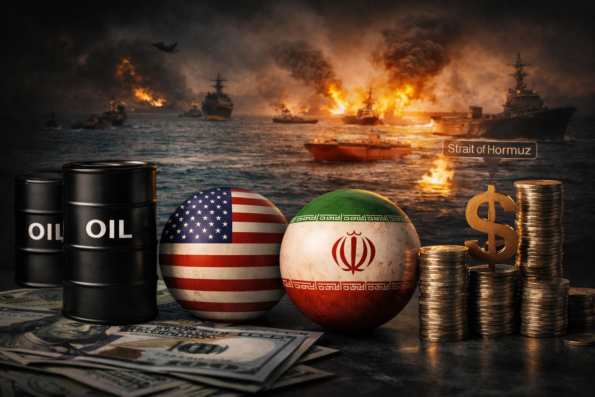
For an Iranian regime facing an existential struggle, raising crude oil prices serves as a vital, and perhaps the sole, measure of success amidst significant pressure from the US and Israel’s bombing. “Energy markets are the battlefield in which the next phase of the conflict is unfolding. …Iran is clearly playing to the markets now, in the calculus that this will put pressure on the Trump administration” (Geoffrey Pyatt, a former White House energy adviser, in the FT, 14-15 March 2026: 9). Iran’s de facto blockade of the Strait of Hormuz, through which approximately twenty percent of the world’s oil and liquefied gas typically transits, presents significant concerns. At its narrowest point, the strait measures less than 21 nautical miles in width, thereby positioning tankers at considerable risk from drones and missiles originating from Iran coastline.
Iran has historically refrained from blocking the strait despite numerous past security threats from the United States and Israel. Its decision to do so at this juncture signifies the extent to which the current conflict has become a matter of existential importance for the regime survival. Competition for the Middle East’s rich oil resources played a central role in the global politics of the 20th and 21st centuries. Even the two major world wars, which happened in the first half of the 20th century, were intrinsically linked to competition for access to the energy-rich Middle East.
For the US, the oil-rich regions of the Middle East have played a key role in determining foreign policy, this is simply because the Middle Eastern oil regions account for 65 per cent of the world’s proven oil reserves, and 30 per cent of its day-to-day production, and therefore the Middle East has been the geographic centre of gravity of the world oil industry (Okogu, 2003). The region, therefore, is a truly vital strategic US interest. But this dimension cannot be reduced solely to matters of economic prosperity, even though it represents a part. Above all, the oil dimension in US foreign policy is a strategic one that primarily concerns the exercise of global power, a central part of US global hegemony.
When a hegemonic power imposes its political and economic authority over a region, it does so in relation to its allies and its local protégés. Even though currently the US economy is self-satisfied in terms of oil and gas thanks to the “fracking revolution” of the 2000s and 2010s, US ally Japan and Western European economies are dependent on oil imports from the Middle East, and US protégés in that region, the oil monarchies, require US protection and military and political support. Through its influence over the region’s oil-rich regimes, the US has consolidated its strategic presence in the Middle East by effectively controlling the “global oil spigot”. This concept highlights the geopolitical dynamics where control over oil resources can influence global economic stability and energy security. This also seems to be an effective way to ward off competition for top position in the global hierarchy, as all its competitors, in particular China, are heavily dependent on this essential resource, oil, from the Middle East.
It was during the First World War that the US accorded the Middle East region strategic importance due to its rich oil resources. At that time, Britain’s declining global empire controlled key oil-producing regions of the Middle East. During the First World War, keeping those oil-rich lands under British control was a crucial goal for the British government. Sir Maurice Hankey, the powerful secretary of the British War Cabinet, wrote to the foreign secretary, Arthur Balfour, during the war’s final stage that “oil in the next war will occupy the place of coal or at least a parallel to coal”. Therefore, Hankey said, “Control over these [Middle Eastern] oil supplies becomes a first-class British war aim” (given in Yergin 1991:185–188). Oil surpluses of the 1930s quickly disappeared during the Second World War, and the US, the new hegemonic state within the global system, began to rely on foreign oil in the 1940s. With only 6 per cent of the world’s population, the US accounted for one-third of global oil consumption. Energy security, since then, has become an essential dimension of US state security, meaning the uninterrupted availability of energy sources at an affordable price and unwavering access to foreign oil reserves.
The question of US influence over Middle Eastern oil-rich countries has become increasingly important since the Second World War. Between 1940 and 1967, US companies increased their control of Middle Eastern oil from a mere 10 per cent to over 60 per cent (Monthly Review, 2002). The so-called ‘Carter Doctrine’ of January 1980 perhaps symbolises this heightened significance of the region’s oil for the US state more than anything else: “Let our position be absolutely clear: An attempt by any outside force to gain control of the Persian Gulf region will be regarded as an assault on the vital interests of the United States of America, and such an assault will be repelled by any means necessary, including military force” (given in Klare, 2004:45–47). President Jimmy Carter, in his annual State of the Union Address to Congress, also reiterated his plans to increase military spending by 5 per cent, with special emphasis on developing a 100,000-man “rapid deployment force” capable of intervention in the region. President Carter himself did not use the term “Carter Doctrine” to refer to his policies in the Middle East in any public statement during his term in office. However, the label was used later in official US documents (see Meiertons, 2010). More than 40 years have passed since the first articulation of the Carter Doctrine, and the significance of the oil-rich Middle East for the US’s global position still remains a central pillar of world politics. It ensures, with the use of violence, if necessary, that Middle Eastern oil remains accessible, free-flowing, cheap, and under US control.
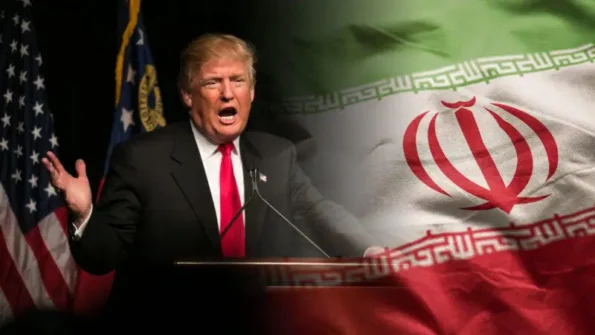
When, in 1953, President Dwight Eisenhower approved the CIA’s effort to help the British to overthrow Iran’s elected prime minister, the American public was presented with a familiar explanation: communist expansion was threatening, so Cold War vigilance was necessary, and the US couldn’t afford to have another Soviet ally in the Middle East. However, behind this straightforward story of containment lay a more concrete interest—oil. Iran’s vast oil reserves weren’t just a strategic resource; they represented a crucial economic and geopolitical prize in 1953. More than seven decades on, with a US heavy military campaign once again threatening Iran, a different president is in the Oval Office, yet the same obsession remains alive. Since Donald Trump resumed his second presidency in January 2025, the United States has conducted military operations in seven countries: Iran, Iraq, Nigeria, Venezuela, Syria, Yemen, and Somalia. The initial five listed are all major oil producers. While U.S. military actions are not solely focused on oil, oil remains a prominent and unavoidable theme in these interventions. Iran is recognised as one of the leading producers of oil and gas globally. It possesses the second-largest proven natural gas reserves and the third-largest crude oil reserves worldwide. It holds approximately 24 per cent of the Middle East’s and 12 per cent of the world’s proven oil reserves, according to the United States Energy Information Administration (Ali, 2025). The acquisition of Iranian oil, combined with potential resources from Venezuela, would enhance U.S. energy dominance and reduce China’s access to a critical fuel supply.
The history, however, is replete with lessons indicating that safeguarding the United States interests in the Middle East’s oil resources is not as straightforward as merely intervening militarily or capturing a nation’s key positions. Political events since 2001 have clearly demonstrated that superior military forces of the US and its allies took but could not hold Iraq’s, Libya’s, or other Middle Eastern countries’ oil. Far from staving off the downfall of the US economic and financial hegemony, the continuing military aggression and arrogance of the US state may instead push its allies, both in the region and Europe, to distance themselves from its strategic goals.
REFERENCES
Ali, Marium (2025). “Mapping Iran’s oil and gas sites and those attacked by Israel”, Al Jazeera, 17 June, https://www.aljazeera.com/news/2025/6/17/mapping-irans-oil-and-gas-sites-and-those-attacked-by-israel
FT (Financial Times) (2026). 14-15 March.
Harvey, David (2005). The new imperialism (pb edn). Oxford: Oxford University Press.
Klare, M. (2004). Blood and Oil. How America’s Thirst for Petrol is Killing US, London: Hamish Hamilton.
Meiertons, H. (2010). The Doctrines of US Security Policy, Cambridge: Cambridge University Press.
Monthly Review (2002) “US Imperial Ambitions and Iraq”, Monthly Review 54(7), December, http://monthlyreview.org/2002/12/01/u-s-imperial-ambitions-and-iraq/
Okogu, Bright E. (2003). “Middle East to Dominate World Oil for Many Years”, IMF, March, https://www.imf.org/external/pubs/ft/fandd/2003/03/okog.htm
Yergin, D. (1991). The Prize: The Epic Quest for Oil, Money and Power, New York: Simon & Schuster.