

Bulent Gokay *
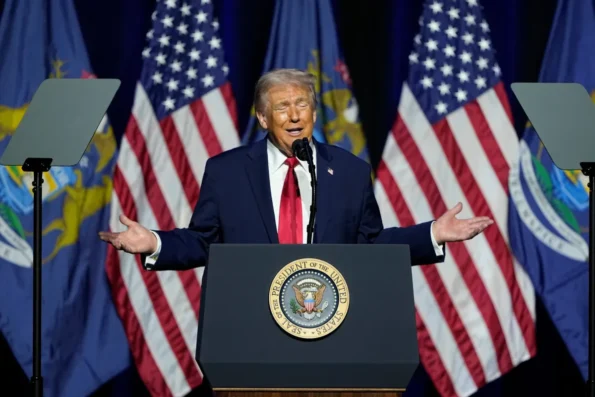
Since the United States and Israel commenced their unwarranted and unprovoked strike against Iran, the character of the offensive has become apparent. It constitutes a large-scale bombing campaign intended to systematically dismantle the Iranian state and subjugate the entire population. The US state under Trump has started a war whose outcomes it neither anticipates nor controls. Its actions have an element of irrationality, but this irrationality is based on decades of aggression in the Middle East, and in particular against Iran since the late 1990s.
Retired U.S. General Wesley Clark has famously recounted seeing a 2001 Pentagon memo that detailed plans to “take out” seven countries over five years, culminating in Iran. Clark attributed the origin of these plans to the neoconservatives within the George W. Bush administration, specifically mentioning the influence of the Project for the New American Century (PNAC) (Greenwald, 2011). PNAC was an influential think tank established in 1997, and almost all of its major figures found themselves in the George W. Bush administration after 2000. Considering US foreign policy in the Middle East since the start of this century, this attack should not be considered a surprise and is largely unrelated to the idiosyncrasies of Donald Trump, who is simply implementing a longstanding project aimed at establishing complete US dominance over the energy-rich regions of the Middle East. Furthermore, American (and Western) interventions in Iran have a long history. Indeed, I co-authored a book with Paul Rogers, published in Turkish in 2006, in which we were predicting that Iran would be the next target in the Bush administration’s War on Terror in the Middle East (Gokay & Rogers, 2006).
How has Iran become a focus for American foreign policy?
The Western interests in Iran goes back to early 1950s. In the early 1950s, Iran had a democratic and secular government led by Prime Minister Mohammad Mosaddegh, who championed the nationalisation of the British-controlled oil industry to improve national welfare. Mosaddegh’s political ideology, often called Mosaddeghism, was a convergence of Iranian nationalism, anti-imperialism, and social democratic principles. The Anglo-Iranian Oil Company (now BP) paid Iran only 16% of its profits and often far less, while making vast sums for the British interests. Mohammad Mossadegh was hugely popular in the country for taking a stand against the Anglo-Iranian Oil Company. His nationalisation efforts led the British government to begin planning to remove him from power. In response to Iran’s nationalisation of the Anglo-Iranian Oil Company, Britain orchestrated a severe economic boycott and, in September 1951, implemented financial measures to block Iran’s ability to convert currency, specifically aimed at starving the Iranian government of funds (Barr, 2021).
Following the boycott of Iranian oil, the Eisenhower administration in the US approved helping the British in organising a coup, citing fears that economic instability could lead to a communist takeover. In 1953, the CIA and MI6 orchestrated a coup d’état, known as Operation Ajax/ Boot, to overthrow Mohammad Mosaddegh. The coup reinstated Shah Mohammad Reza Pahlavi, who had briefly fled the country, and solidified his power as an autocratic monarch. Shah re-established foreign control over Iranian oil and governed the country as a dictator, leading to 26 years of authoritarian rule supported by the SAVAK secret police. Mosaddegh was convicted of treason, served three years in prison, and remained under house arrest until his death in 1967. Other leaders of the previous democratic government were imprisoned, tortured and in some cases executed (Brew, 2019). The CIA later acknowledged this was a deliberate act of US foreign policy to protect Western oil interests and prevent potential communist influence. The event is widely viewed as a precursor to the 1979 Iranian Revolution and was officially acknowledged by the US in 2013 (Dehghan and Norton-Taylor, 2013).
In 1979, the Shah was overthrown in a popular uprising that culminated on 11 February 1979 with broad support from a diverse coalition of Iranians. However, a fundamentalist Islamic group led by Ayatollah Khomeini took control of the post-Shah Iranian state. Under his rule, leaders of other opposition groups were purged and executed, and Iran became an Islamic Republic. Under this system, an unelected Islamic Supreme Leader exists alongside a president elected every four years, though candidates must be approved by the Supreme Leader and Guardian Council. The recently assassinated Ayatollah Khameini succeeded Ayatollah Khomeini as the first Supreme Leader in 1989.
Back to today
For the US, destabilising or gaining control of Iran serves as a precursor to exerting more pressure on Russia and confronting China, which have been the main geopolitical objectives of various US administrations since before the War on Terror, as mentioned earlier in this text. The US aims to control global oil supplies, but not because of the need for Iran’s oil. Previously, the US pursued this for energy security and economic advantages. However, now that it has become a net energy exporter in the 21st century, its current objective is to gain influence over China’s oil supply. Although China’s supply appears diversified, the share from US vassal states has gradually increased. Despite geopolitical tensions, China’s primary crude oil suppliers originate from nations with close security alliances with the United States. In 2024 and early 2025, Russia persisted as the leading supplier; however, Saudi Arabia, Iraq, and the United Arab Emirates collectively constitute a significant, stable, and US-aligned segment of China’s import portfolio. Amid recent regime changes in Syria and heightened pressures on Venezuela, China’s dependency primarily remains on Russia and Iran. The cessation of Iranian oil imports would markedly weaken China’s position, notwithstanding its ongoing transition towards renewable energy sources (Soni & Allen, 2026).
The Trump administration’s actions against Iran are not only illegal but also demonstrate a dangerous level of recklessness. Trump, a keen critic of the 2003 US invasion of Iraq and the policies of the neoconservatives of the Bush administration, is now repeating exactly the same mistake. To justify the illegal invasion of Iraq in 2003, fake evidence was manufactured about Iraq’s alleged Weapons of Mass Distraction. Similarly, the Trump administration now claims that their measures against Iran are connected to its nuclear weapons programme. However, many have pointed out over the years that this claim does not stand up to scrutiny. The assertion that Iran is actively developing a nuclear bomb—specifically, the weaponisation stage—has not been confirmed by the International Atomic Energy Agency (IAEA). As of March 2026, IAEA Director General Rafael Grossi has stated there is “no evidence that Iran is currently building a nuclear bomb” (Middle East Monitor, 2026). Many experts claim that the Trump administration is reusing the 2003 rhetoric to justify its actions against Iran, despite being torn between “America First” isolationism and aggressive interventionism, having a divided team, isolated diplomatic efforts, and chaotic information. “We are not at war with Iran, we’re at war with Iran’s nuclear programme,” Vice President J. D. Vance said. Trump contradicted him by claiming the aim is regime change (Mansour, 2026).
Failed Negotiations or “policy of expediency”
In recent weeks, Iran has been negotiating with the United States, facilitated by Oman, Qatar, Egypt, and Turkey. Indirect negotiations between the US and Iran took place in early February 2026 in Muscat, Oman, with further rounds in Geneva. Just before the bombing in Tehran began, Omani mediators reported “significant progress” and described a “breakthrough” in which Iran agreed never to possess nuclear-grade material. It was just days before the bombing started, the US engaged in what appeared to be dialogue with Iran, but it seems their true aim was always to initiate a bombing campaign, now openly acknowledged by the US government.
This pattern echoes a darker chapter in United States history: the recurrent negotiation and subsequent violation of treaties with Native American nations. The history of United States-Native American relations is defined by a pattern of treaty-making to pacify indigenous resistance or secure land, followed by treaty-breaking as American military dominance and settler expansion increased. From 1778 to 1871, over 500 treaties were signed; many were broken, ignored, or renegotiated by the U.S. government to facilitate westward expansion. Treaties like Fort Laramie (1851 and 1868) granted large territories to the Sioux and Plains tribes but were often broken due to gold rushes and military actions, resulting in reservations and massacres such as Wounded Knee. Forced agreements in the Southeast, such as the Treaty of New Echota (1835) with the Cherokee, facilitated the Trail of Tears (Zotigh, 2019).
These characteristics were not incidental but intrinsic elements of settler-colonial strategies—compromising for convenience when in a position of weakness, reneging when in strength, and justifying betrayal as a form of progress towards “civilization”. Historians often refer to this as a “policy of expediency,” wherein treaties were considered provisional instruments of diplomacy rather than enduring legal arrangements commitments (Urlacher, 2024). This cycle represented a crucial element of the United States westward expansion, frequently justified by ideologies such as Manifest Destiny and implemented through legal, military, and economic pressures. Manifest Destiny was a 19th-century belief that the expansion of the United States across North America was divinely sanctioned, justified, and inevitable. Advocates supported this ideology to rationalise westward expansion as a mission to promote democracy and “civilisation,” a divine endowment, which enabled the acquisition of territories such as Texas, Oregon, and California, while displacing Indigenous peoples (Dobson, 2013).
The current US diplomacy with Iran can be characterised as an extension of an imperial modus operandi, reflecting a pattern in which agreements serve as leverage points, contingent upon full compliance and discarded when paramount interests necessitate escalation. Critics contend that the approach adopted by the Trump administration, integrating military operations with a binary choice between capitulation and conflict, exemplifies historical imperial patterns of dominance.
What next?
The conflict in Iran constitutes a significantly larger campaign than any of Trump’s previous interventions, many of which have generally been limited in scope and objectives. There is invariably a performative aspect to Trump’s policies and actions. It is most probable that his expectation is for the Iranian regime, after several days of intense bombing and loss of senior leadership, to declare, “OK, we’re ready to settle our differences through negotiations on your terms.” At present, there is no evidence to suggest that this will occur. Conversely, the Iranian leadership is intensifying patriotic rhetoric nationwide and leveraging its capacity to disrupt a vital segment of the global energy supply, hoping that Trump may grow weary of this conflict. Simultaneously, there are already concerning signs that this crisis is rapidly escalating into a major international issue, akin to the Arab-Israeli conflict of the 1973 war.
References
Barr, James (2012). “The lessons to be learned for today from Britain’s 1951 Iran crisis”, The New Statesman, 13 June, https://www.newstatesman.com/culture/observations/2012/06/the-lessons-to-be-learnt-for-today-from-britains-1951-iran-crisis
Brew, Gregory (2019). “The Collapse Narrative: The United States, Mohammed Mossadegh, and the Coup Decision of 1953”, Texas National Security Review, Vol. 2/4, November, https://tnsr.org/2019/11/the-collapse-narrative-the-united-states-mohammed-mossadegh-and-the-coup-decision-of-1953/
Dehghan, Saeed Kamali & Richard Norton-Taylor (2013). “CIA admits role in 1953 Iranian coup”, The Guardian, 19 August, https://www.theguardian.com/world/2013/aug/19/cia-admits-role-1953-iranian-coup
Dobson, Darren (2013). “Manifest Destiny and the environmental impacts of Westward expansion”, Flinders Journal of History and Politics, vol.29, January, pp.41-69.
Gokay, Bulent & Paul Rogers (2006). Irak, Iran ve Petrodolarin Sonu, Versus Yayinlari.
Greenwald, Glenn (2011). “Wes Clark and the neocon dream”, Salon, 26 November, https://www.salon.com/2011/11/26/wes_clark_and_the_neocon_dream/
Mansour Mohammad (2026). “How Trump’s 2026 Iran ‘war’ script echoes and twists the 2003 Iraq playbook”, Al Jazeera, 26 February, https://www.aljazeera.com/news/2026/2/26/how-trumps-2026-iran-war-script-echoes-and-twists-the-2003-iraq-playbook
Middle East Monitor (2026). “IAEA says no evidence Iran is building a nuclear bomb”, 4 March, https://www.middleeastmonitor.com/20260304-iaea-says-no-evidence-iran-is-building-a-nuclear-bomb/
Soni, Paloma & Catherine Allen (2026). “5 charts show China’s oil dilemma after US strikes”, Politico, 3 February, https://www.politico.com/news/2026/03/02/iran-us-strikes-china-oil-supply-charts-00806415
Urlacher, Brian R. (2024). “Broken Promises: Revisiting the Commitment Problem and the Treaties of Fort Laramie”, Ethnopolitics, 30 September, https://www.tandfonline.com/doi/abs/10.1080/17449057.2024.2406152
Zotigh, Dennis (2019). “The Treaty That Forced the Cherokee People from Their Homelands Goes on View”, Smithsonian Magazine, 24 April.
-
- Bulent Gokay is a professor of International Relations at Keele University.