

Bulent Gokay
The forcible abduction of Nicolas Maduro, a sitting president, and Celia Flores, who is more than just a wife, also a former head of the National Assembly, and the killing of at least 80 civilians and military personnel, including 32 Cuban guards of Maduro, is clearly a significant violation of Venezuelan sovereignty and the UN Charter (Weller, 2026). Trump’s heavy-handed strategy can also be seen as a return to the gunboat diplomacy of the 1850s, when military giants stripping assets from their weaker neighbours. This aggression reinforces the view that this is the US’s typical approach to international relations in the 21st century, centred on violence and control. The recent escalation of violence and the abduction of Maduro are accompanied by a new National Security Strategy that openly announces a “Trump corollary” to the Monroe Doctrine.
On December 2, 1823, the doctrine of American sovereignty was immortalized in prose when President James Monroe declared before the Nation a simple truth that has echoed throughout the ages: The United States will never waver in defense of our homeland, our interests, or the well-being of our citizens. Today, my Administration proudly reaffirms this promise under a new “Trump Corollary” to the Monroe Doctrine: That the American people—not foreign nations nor globalist institutions—will always control their own destiny in our hemisphere (Trump, 2025)
The Trump administration has left no doubt that Venezuela and its vast oil reserves, the largest in the world, are the primary targets of such aggressive actions, not the alleged claim that Maduro is involved in illegal drug trade. Trump has openly stated this in media interviews and provocative social media posts that US military actions will only intensify “Until such time as they return to the United States of America all of the Oil, Land, and other Assets that they previously stole from us” (Al Jazeera, 2025). In line with these threats, the US has seized oil tankers at sea in a manner reminiscent of piracy and has imposed a blockade—an act of war aimed at starving Venezuela of resources.
The recent attack on Venezuela is not the first by the US against that country. The pressure campaign started in 2001 when Hugo Chávez’s government unilaterally enacted the Decreto con Fuerza de Ley Organica de Hidrocarburos (Hydrocarbons Law). This law declared state ownership of all oil and gas reserves, controlled upstream exploration and extraction through state-owned companies. Still, it permitted private firms—both domestic and foreign—to operate in downstream activities like refining and sales. This action angered US oil giants, particularly ExxonMobil and Chevron, which urged the Bush administration to pressure Chávez to reverse the nationalisation of the industry. This friction culminated in an April 2002 US-backed coup that saw Chávez briefly deposed and imprisoned before mass protests forced his reinstatement. From December 2002 to February 2003, the White House backed an executive lockout in the strategic oil industry, supported by corrupt trade union officials aligned with Washington and the American Federation of Labour and Congress of Industrial Organisations (AFL-CIO). After three months, the lockout was overcome thanks to an alliance of loyalist trade unionists, mass organisations, and overseas petrol-producing countries.
In 2007, the Chávez government carried out another round of nationalisations, reversing the growing privatisation and handover of operations to the US-based corporations that had taken place over the previous decade. This measure was taken only after ExxonMobil and ConocoPhillips refused to sign deals to keep pumping heavy oil under tougher terms in Venezuela’s Orinoco River basin, signalling their departure from one of the world’s largest oil deposits. Four other oil companies — U.S.-based Chevron Corp., BP PLC, France’s Total SA and Norway’s Statoil ASA — signed deals to accept minority shares in the oil projects under new terms set by President Chavez’s government (NBC News, 2007).
After the death of Chávez and his succession by Nicolás Maduro in 2013, a fall in oil prices, compounded by the imposition of punishing economic sanctions initiated under the Democratic administration of Barack Obama and intensified ever since, led to a dramatic shrinking of Venezuela’s economy, mass outward migration and a plummeting of living standards. The global oil price collapse was the main source of Venezuela’s woes since the nation depends on crude for more than 90 per cent of its export revenues. Intensified sanctions by the US administration made the situation worse, and Maduro blamed the sanctions for an attempt to topple his government (Reuters, 2016).
US intervention escalated, including through coup plots, attempted assassinations and even the landing of mercenaries on Venezuela’s shores. The Trump administration sought to impose its own president, the unelected and largely unknown right-wing legislator Juan Guaidó, whose “interim government” failed to gain popular support, proving adept only at pilfering millions of dollars in US aid funding (BBC, 2020; Al-Jazeera, 2020).
The latest US National Security Strategy document, issued by the White House in November 2025, prepared ground for the recent aggression against the Venezuelan regime:
After years of neglect, the United States will reassert and enforce the Monroe Doctrine to restore American preeminence in the Western Hemisphere, and to protect our homeland and our access to key geographies throughout the region. We will deny non-Hemispheric competitors the ability to position forces or other threatening capabilities, or to own or control strategically vital assets, in our Hemisphere. This “Trump Corollary” to the Monroe Doctrine is a common-sense and potent restoration of American power and priorities, consistent with American security interests (National Security Strategy, 2025: 15).
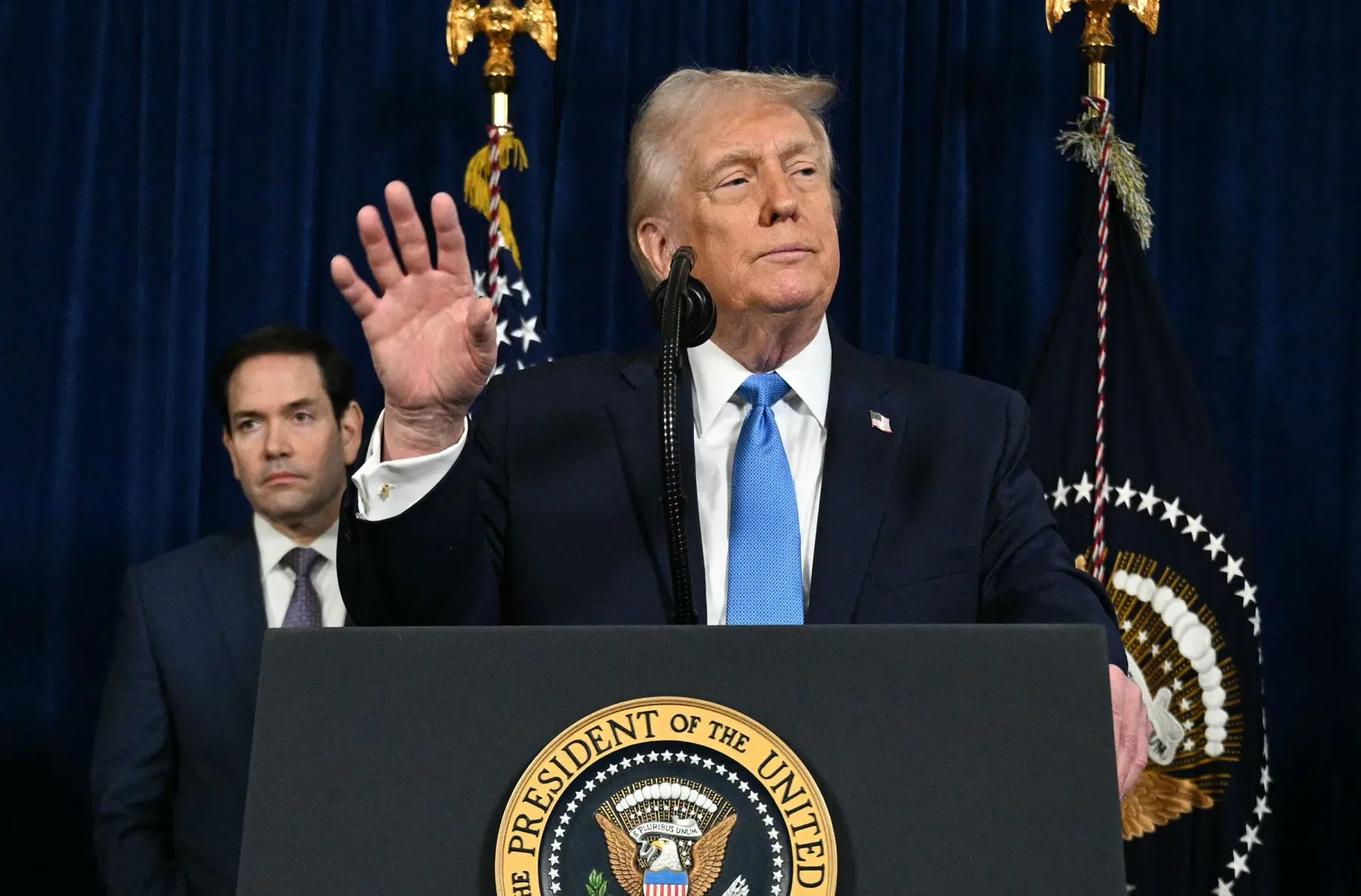
Following the capture of Maduro and his wife, Trump said in a press conference, “We are going to run the country until such time as we can do a safe, proper and judicious transition,” from his Mar-a-Lago residence in Palm Beach, Florida. The purpose of the assault on Venezuela, he declared on Saturday, was to seize control of the country and its oil resources. “We’re going to have our very large United States oil companies, the biggest anywhere in the world, go in, spend billions of dollars,” Trump declared. If there is any resistance, Trump threatened a more brutal military onslaught. “We are ready to stage a second and much larger attack if we need to do so” (Buchwald, 2026).
Beyond its massive oil reserves, Venezuela is exceptionally rich in other critical resources. There are significant gold reserves, mainly in the southeast (Guiana Highlands). Diamond deposits are also found in the Guiana region, though on a smaller scale than gold and bauxite. Venezuela has documented deposits of copper, nickel, and manganese, and, in smaller quantities, coltan and cassiterite, associated with newer mining frontiers. Surveys indicate the presence of potentially substantial uranium and thorium deposits.
Major American financial players, including hedge funds and asset managers (such as Goldman Sachs, BlackRock, and T. Rowe Price), are positioning themselves to capitalise on Venezuela’s vast oil and mineral wealth, seeking distressed assets from Venezuela’s state oil company, PDVSA, and other opportunities in gold, diamonds, and rare earths. The Wall Street Journal reported Saturday that top hedge funds and asset managers are preparing to send a delegation of about 20 business leaders to Caracas in March to assess what one investor called $500–$750 billion in “investment opportunities”, including the energy sector and infrastructure over the next five years (Schwartz, 2026).
Above all, the aggression against Venezuela is a strategic play to squeeze out other powers from accessing Venezuela’s oil. In this sense, Trump’s war serves a critical geopolitical purpose. The invasion of Venezuela and the abduction of its president are meant, as Trump put it on Saturday, as a “warning” to “anyone who would threaten American sovereignty” (Hurlburt, 2026). Referring to his new National Security Strategy, Trump declared that “American dominance in the Western Hemisphere will never be questioned again.” Invoking the infamous “blood and iron” speech of the nineteenth-century Prussian militarist Bismarck, Trump hailed the assault as a reassertion of the “iron laws that have always determined global power” (Zurcher, 2026; Chait, 2026).
The immediate targets are governments in Latin America that may act against US imperialist interests. Speaking of Colombian President Gustavo Petro, Trump warned in the language of a street thug, “He has to watch his ass.” The Secretary of War, Pete Hegseth, added: “America can project our will anywhere, anytime,” drawing a direct parallel between Venezuela and last year’s US bombing of Iranian nuclear sites. “Maduro had his chance,” he sneered, “just like Iran had their chance—until they didn’t” (Guardian, 2026).
But the threats are not confined to Latin America. With thinly veiled threats, Trump is rattling hemispheric friends and foes alike. In addition to Venezuela and Iran, the United States bombed five other countries last year: Syria, Iraq, Yemen, Somalia and, most recently, Nigeria in December. Trump has threatened war against Mexico, floated the annexation of Greenland and Canada, and declared the Panama Canal “non-negotiable” for US control.
The message sent to China is clear and forceful. Just hours prior to the attack, Venezuelan President Nicolás Maduro held talks with a senior Chinese delegation, led by Beijing’s Special Representative for Latin American and Caribbean Affairs, Qiu Xiaoqi, focusing on energy collaboration. The US raid, synchronised with this meeting, was an aggressive move designed to hinder the expanding relationship between China and Latin America. China has already outstripped the US as South America’s leading trade partner and is expected to overtake it throughout Latin America and the Caribbean by 2035. The US cannot match the scale of infrastructure investments being carried out, from the new deep-water port at Chancay, Peru, to the development of 5-G networks. Meanwhile, the European Union is also pursuing its own access to the region’s critically important sources of raw materials.
The actions taken by the Trump administration are not only criminal but also demonstrate a dangerous level of recklessness. Trump, a sharp critic of the US invasion of Iraq, will now have to heed the words of one of the American architects of the Iraq War, Secretary of State Colin Powell, “If you break it, you own it” (Zurcher, 2026). Mary Ellen O’Connell, a professor at Notre Dame Law School, likened these actions to the 2003 invasion of Iraq. That invasion caused severe economic collapse, rising unemployment, increased division within the country, more violent resistance, civil strife, and ultimately empowered certain ISIS factions. When President Barack Obama announced the official end of the Iraq war and began the troop withdrawal in 2011, Iraq was left deeply traumatised with a collapsing economy. The conflict lasted eight years, resulting in over 200,000 Iraqi civilian deaths and the loss of 4,492 American service members. More than 32,000 service members were injured. The war’s total cost reached around $6 trillion, it destabilised the region, and Iraq was left with another authoritarian and unstable regime (Anastacio & Murray, 2023). The 2003 invasion was a significant and costly error. Even some prominent advocates of the war have since labelled it “a major mistake,” a catastrophe, or “a big fat mistake” (Doak, 2023).
Similar to what Trump and his administration have repeatedly announced, namely that they now care about Venezuela and promise freedom and growth for the country, just three weeks before the Iraq War began, then President George W. Bush made similar promises about Iraq. He addressed the annual dinner of the American Enterprise Institute (AEI) and, in his speech, emphasised the necessity of establishing a “free Iraq.” By “protect[ing] Iraq’s natural resources from sabotage” and ousting the Hussein dictatorship, Bush hoped that Iraqis “can fully share in the progress of our times” (Bush, 2003). In the period leading up to the 2003 invasion, Iraq was often characterised in various media and political discourse as a nation on the brink of collapse, grappling with profound social and economic decay. Almost the same language can be found in the mainstream media in the West about Venezuela under Maduro (Doornbos, 2026).
The current actions against Venezuela are even more reckless than Bush’s campaign against Iraq, resembling a disaster in progress. On Saturday, Trump announced plans to impose a dictatorship in Venezuela, stating that the country would be controlled by figures like Secretary of State Marco Rubio, Defence Secretary Pete Hegseth, and other officials from the Trump administration. This idea ignores the reality that Venezuela, with its 30 million people and over 350,000 square miles, cannot be governed by Washington bureaucrats. In truth, such an occupation would necessitate deploying hundreds of thousands of U.S. troops and launching a harsh urban warfare campaign against widespread resistance. Trump emphasised this by noting he is not afraid of having “boots on the ground” (NBC News, 2026).
It should be noted that the 2003 Iraq invasion involved more than 100,000 coalition troops, with 125,000 from the United States. Over 340,000 US personnel were deployed in the region to support the campaign in Iraq (Otterman, 2005). Iraq, which has a smaller population than Venezuela, had already suffered from ten years of sanctions. The military occupation required to control Venezuela would rapidly lead to a bloody and extended conflict throughout Latin America and potentially beyond.
The aggressive stance of the Trump administration can only be fully understood within the larger crisis of American hegemony. Politically, many concealed motives probably shape Trump’s actions, such as efforts to distract from the shocking revelations about the Epstein sex-trafficking network, which involved high-profile figures from the financial sector and government apparatus.
Greater US interests are involved here. The US aims to address the long-term decline of its economy by turning to militarism and conflict. The foundations of US global dominance have considerably weakened. Gold prices have risen above $4,300 per ounce, reflecting a loss of confidence in the dollar as the world’s reserve currency. With the national debt surpassing $38 trillion, US fiscal liabilities are at a historically high level. The total reflects decades of fiscal stress and represents money the federal government has borrowed, much of it through Treasury securities. The takeovers of Venezuela’s oil and the renewed American influence over the Western Hemisphere are viewed by the ruling elite as crucial to maintaining its economic and geopolitical power.
Before Trump’s aggressive campaign against Venezuela and his aggressive threats to other countries, this century has already witnessed tragic wars in the Middle East, North Africa and in Ukraine. This is the direct consequence of a process of what Giovanni Arrighi called Hegemonic Transition within a period of systemic chaos, where “the incumbent hegemonic state lacks the means or the will to continue leading the system of states”. This long and protracted period of hegemonic transition from the Euro-Atlantic core to Asian economies, especially China and India, like every other period of hegemonic transition and instability in which “the old is dying, and the new cannot be born”, creates morbid symptoms. In many parts of the world, including the United States and Europe, new forms of authoritarianism have emerged within the context of global crisis, severe austerity measures, economic nationalism, racism and xenophobia (Gokay, 2017).
When the authority of a major power or superpower is on the wane, this affects the entire world order and leads to instability. The United States has been experiencing a decline over the past four decades that has become more noticeable since the end of the Cold War. Even though the United States remains the world’s most significant and influential economic and military power, it is nevertheless struggling with severe weaknesses stemming from low economic growth and the protracted decline of its industry. The decline in productive capacity and the ever-widening gap between productive and financial accumulation lead to recurrent financial and economic crises across the world.
This is what primarily drives the breakdown of the global order and the turn of the ruling elite in many countries toward unconstrained economic and political nationalism. The West, collectively, does not have the means to back up its policies in the Middle East, Africa, Ukraine, and Southeast Asia. The emerging powers, on the other hand, aspire to a new world order for the global system but lack real leadership capacity. They are not yet in a position to impose their authority upon various regional and global conflicts. Therefore, leadership, order, and regional and global governance are no longer assured.
The world is currently in a fragile imbalance as the global hegemon’s decline continues, described aptly by Financial Times chief commentator Martin Wolf: “US power has retreated both geo-politically and economically, and we are living, once again, in an era of strident nationalism, and xenophobia” (Wolf, 2017). Additionally, with Trump-II, we are once again witnessing imperialist aggression reminiscent of the 19th century.
Sources
Al-Jazeera (2020). “Venezuela ‘failed coup plot’: What we know so far”, 6 May, https://www.aljazeera.com/news/2020/5/6/venezuela-failed-coup-plot-what-we-know-so-far
Al-Jazeera (2025). “Trump aide Stephen Miller suggests Venezuelan oil belongs to US”, 17 December, https://www.aljazeera.com/news/2025/12/17/trump-aide-stephen-miller-suggests-venezuelan-oil-belongs-to-us https://www.nbcnews.com/meet-the-press/meetthepressblog/iraq-war-numbers-rcna75762
Anastacio, Nicholas and Mark Murray (2023). “The Iraq War – by the numbers”, NBC News, 20 March, https://www.nbcnews.com/meet-the-press/meetthepressblog/iraq-war-numbers-rcna75762
BBC (2020). “Venezuela detains two US citizens over speedboat incursion”, 5 May, https://www.bbc.co.uk/news/world-latin-america-52543033
Buchwald, Elisabeth (2026). “Trump wants the US oil industry to thtrive in Venezuela again. That won’t be easy”, CNN, 5 January, https://edition.cnn.com/2026/01/04/business/oil-us-companies-venezuela
Chait, Jonathan (2026). “Trump’s Retro Imperialism”, The Atlantic, 5 January, https://www.theatlantic.com/politics/2026/01/trump-venezuela-oil-seize/685509/
Doornbos, Caitlin (2026). “Trump says US must restore law and order to Venezuela before elections — opposition leader could only win with his support”, New York Post, 4 January, https://nypost.com/2026/01/04/us-news/trump-says-us-must-restore-law-and-order-to-venezuela-before-elections-opposition-leader-could-only-win-with-his-support/
Gokay, Bulent (2017). “The Rise of Right-Wing Authoritarianism In The Era of Global Shift”, Social Europe, 31 August, https://www.socialeurope.eu/rise-right-wing-authoritarianism-era-global-shift
The Guardian (2026). “Trump says US will ‘run’ Venezuela after Nicolás Maduro captured and taken to New York”, 4 January, https://www.theguardian.com/us-news/2026/jan/03/trump-venezuela-oil-industry
Hurlburt, Heather (2026). “Trump’s Venezuela attack should serve as a warning even to US allies”, Chatham House, 5 January, https://www.chathamhouse.org/2026/01/trumps-venezuela-attack-should-serve-warning-even-us-allies
National Security Strategy (2025). November, https://www.whitehouse.gov/wp-content/uploads/2025/12/2025-National-Security-Strategy.pdf
NBC News (2007). “Exxon Conoco Refuse to sign Venezuela deal”, 26 June, https://www.nbcnews.com/id/wbna19431319
NBC News (2026). “Maduro arrives in New York as Trump says U.S. will govern Venezuela until there’s a ‘proper transition’”, 3 January, https://www.nbcnews.com/politics/white-house/trump-venezuela-nicolas-maduro-strikes-run-country-transition-military-rcna252044
Reuters (2016). “Obama concerned about Venezuela’s struggling economy”, 15 March, https://www.reuters.com/article/world/obama-concerned-about-venezuelas-struggling-economy-idUSKCN0WH05H/
Schwartz, Brian (2026). “Finance Industry Eyes Investment Opportunities in Venezuela”, The Wall Street Journal, 3 January.
Trump, Donald J. (2025), “America 250: Presidential Message on the Anniversary of the Monroe Doctrine”, 2 December, https://www.whitehouse.gov/presidential-actions/2025/12/america-250-presidential-message-on-the-anniversary-of-the-monroe-doctrine/
Weller, Marc (2026). “The US capture of President Nicolás Maduro – and attacks on Venezuela – have no justification in international law”, Chatham House, 6 January, https://www.chathamhouse.org/2026/01/us-capture-president-nicolas-maduro-and-attacks-venezuela-have-no-justification
Wolf, Martin (2017). “The long and painful journey to world disorder”, Financial Times, 5 January, https://www.ft.com/content/ef13e61a-ccec-11e6-b8ce-b9c03770f8b1
Zurcher, Anthony (2026). “Venezuela could now define Trump’s legacy – and America’s place in the world”, BBC News, 3 January, https://www.bbc.co.uk/news/articles/cx2x70k2q26o
Bulent Gokay is a professor of International Relations at Keele University