

Bulent Gokay & Lily Hamourtziadou
In The History of the Decline and Fall of the Roman Empire, 18th-century English historian and a leading figure of the Enlightenment, Edward Gibbon, posited that empires do not disintegrate suddenly but rather through a prolonged and unavoidable process of internal rot, deterioration, military overreach, and enduring structural transformations (Kingdon, 2025). Nevertheless, historical records occasionally document instances where a single strategic mistake or misjudgement expedites this process. The pertinent question is whether the United States might have been involved in such a pivotal moment during the 2026 conflict against Iran. The joint US-Israel military intervention in Iran, designated as Operation Epic Fury, has been characterised as the most detrimental foreign policy endeavour in the history of the United States and as the imperial overreach that marks the end of the American Century and the beginning of a prolonged decline in the US hegemony.
The Iranian regime merely needs to maintain its hold on power to deem itself victorious. Despite ongoing fluctuations in official military objectives, Donald Trump held the naive expectation that the assassination of the leadership, including the Supreme Leader, would facilitate the installation of a subordinate leader in Tehran within a matter of days. However, the Iranian regime has gone beyond mere survival. Reflecting upon the conflicts in Iraq, Afghanistan, and Libya, Iran has effectively attained a form of strategic victory. Each of these conflicts represented significant strategic failures for Western powers, substantially weakening US hegemony. Nevertheless, in each case, the regimes involved quickly collapsed under the overwhelming force of Western conventional military capabilities. What ultimately undermined US influence in Iraq and Afghanistan was prolonged guerrilla warfare, whereas in Libya, the regime’s downfall was marked by its deterioration into a failed state.
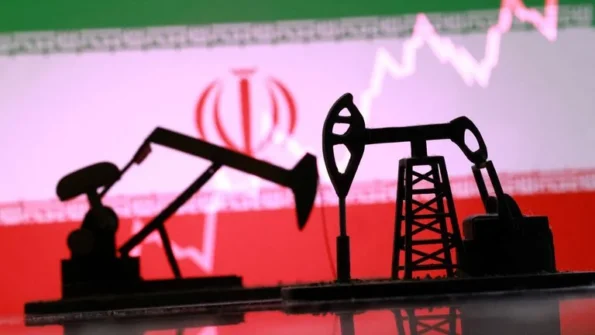
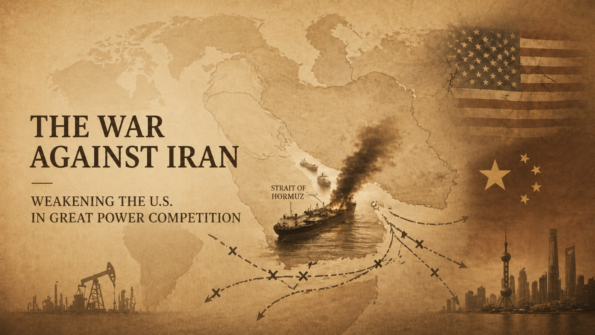
For an Iranian regime confronting an existential struggle, elevating crude oil prices constitutes a critical indicator of success amidst considerable pressure from the United States and Israeli military actions. “Energy markets are the battlefield in which the next phase of the conflict is unfolding. …Iran is clearly playing to the markets now, in the calculus that this will put pressure on the Trump administration” (Geoffrey Pyatt, a former White House energy adviser, in the FT, 14-15 March 2026: 9). Iran’s de facto blockade of the Strait of Hormuz, through which approximately twenty percent of global oil and liquefied natural gas typically transit, raises substantial concerns. The Strait of Hormuz, the most crucial oil transit chokepoint globally, measures less than 21 nautical miles at its narrowest point, thereby placing tankers at significant risk from drones and missile threats emanating from Iran coastline.
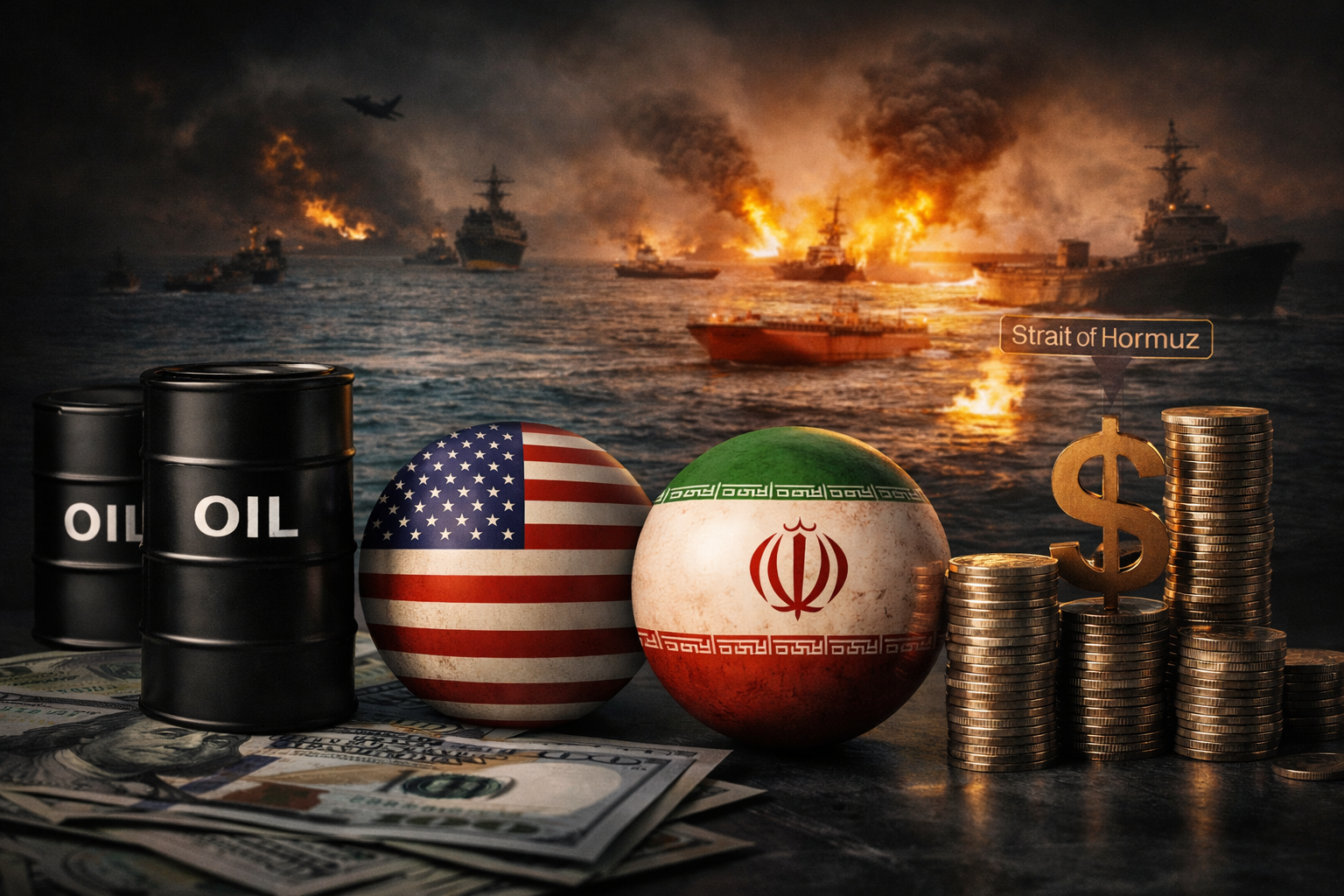
By obstructing the Strait to hostile nations and selling its oil in alternative currencies, Iran is actively challenging the United States’ financial supremacy—the global dominance of the United States dollar, particularly the petrodollar system, which has historically dictated that most of the world’s oil is priced and transacted in US dollars. Iran is now contesting the dollar’s exclusive role by informing countries that, to pass through the Strait of Hormuz, they must cease supporting US-Israeli military actions against Iran and agree to sell oil not in US dollars but in China’s currency, the yuan (Pesek, 2026). The petrodollar system has been a geopolitical tool that has allowed the US to maintain a strong grip on the world economy and financial markets by ensuring the dollar remains the world’s primary reserve currency. The system creates a constant external demand for US dollars and Treasury bonds, which allows the US to run large trade deficits while keeping domestic interest rates low. The dominance of the dollar is not just a financial matter, but also something deeply rooted in the geopolitical role of the United States (Gokay, 2020). It appears Iran fully comprehends the implications of this challenge for US hegemony, the significance of the dollar system, and the petrodollar, which explains Iran’s direct targeting of this system. Consequently, Iran’s blockade of the Strait of Hormuz impacts every nation globally, as this US-Israeli conflict has triggered the most significant oil shock in history, surpassing the shocks experienced in 1973 and 1979.
Iran has historically refrained from blocking the Strait despite numerous past security threats from the United States and Israel. Its decision to do so at this juncture underscores how far the current conflict has become a matter of existential importance to the regime’s survival. Competition for the Middle East’s rich oil resources played a central role in the global politics of the 20th and 21st centuries. Even the two major world wars, which happened in the first half of the 20th century, were intrinsically linked to competition for access to the energy-rich Middle East.
The question of US influence over Middle Eastern oil-rich countries has become increasingly important since the Second World War. Between 1940 and 1967, US companies increased their control of Middle Eastern oil from a mere 10 per cent to over 60 per cent (Monthly Review, 2002). Following the 1973 oil crisis and the collapse of the gold-backed Bretton Woods system, US Secretary of State Henry Kissinger negotiated a historic agreement, commonly known as the US-Saudi Arabian Joint Commission on Economic Cooperation, signed on 8 June 1974. Accordingly, Saudi Arabia, the world’s largest oil exporter, consented to price and sell its oil exclusively in US dollars. As a confidential aspect of the agreement, Saudi Arabia committed to reinvesting its surplus oil revenues (petrodollars) in the US economy by purchasing U.S. Treasury bonds. In return, the United States provided the Saudi regime with military protection, advanced weaponry, and technical assistance. This arrangement established a long-standing security and energy alliance between Washington and Riyadh, which also extended to other oil-rich monarchies in the region.
The so-called ‘Carter Doctrine’ of January 1980 perhaps symbolises this heightened significance of the region’s oil for the US state more than anything else: “Let our position be absolutely clear: An attempt by any outside force to gain control of the Persian Gulf region will be regarded as an assault on the vital interests of the United States of America, and such an assault will be repelled by any means necessary, including military force” (given in Klare, 2004:45–47). President Jimmy Carter, in his annual State of the Union Address to Congress, also reiterated his plans to increase military spending by 5 per cent, with special emphasis on developing a 100,000-man “rapid deployment force” capable of intervention in the region. President Carter himself did not use the term “Carter Doctrine” to refer to his policies in the Middle East in any public statement during his term in office. However, the label was used later in official US documents (see Meiertons, 2010). Over fifty years have elapsed since the US-Saudi agreement and four decades since the initial articulation of the Carter Doctrine. The importance of the oil-rich Middle East to the United States’ global strategic position continues to be a fundamental element of international politics. It guarantees, if required, through the potential application of force, that Middle Eastern oil remains accessible, unobstructed, affordable, and within the influence of the United States control.
When, in 1953, President Dwight Eisenhower approved the CIA’s effort to help the British to overthrow Iran’s elected prime minister, the American public was presented with a familiar explanation: communist expansion was threatening, so Cold War vigilance was necessary, and the US couldn’t afford to have another Soviet ally in the Middle East. However, behind this straightforward story of containment lay a more concrete interest—oil. Iran’s vast oil reserves weren’t just a strategic resource; they represented a crucial economic and geopolitical prize in 1953. More than seven decades on, with a US heavy military campaign once again threatening Iran, a different president is in the Oval Office, yet the same obsession remains alive. Since Donald Trump resumed his second presidency in January 2025, the United States has conducted military operations in seven countries: Iran, Iraq, Nigeria, Venezuela, Syria, Yemen, and Somalia. The initial five listed are all major oil producers. While U.S. military actions are not solely focused on oil, oil remains a prominent and unavoidable theme in these interventions. Iran is recognised as one of the leading producers of oil and gas globally. It possesses the second-largest proven natural gas reserves and the third-largest crude oil reserves worldwide. It holds approximately 24 per cent of the Middle East’s and 12 per cent of the world’s proven oil reserves, according to the United States Energy Information Administration (Ali, 2025). The acquisition of Iranian oil, combined with potential resources from Venezuela, would enhance U.S. energy dominance and reduce China’s access to a critical fuel supply.
For over seventy years, the United States has maintained its position as the cornerstone of the global order, not solely through military strength but also via the institutions, regulations, and economic frameworks that have shaped the post–Second World War international system. To navigate this strategic environment, the United States established a security and energy framework that has become integral to its worldwide influence.
The February 2026 strike on Iran has raised significant questions regarding both the credibility and sustainability of the United States’ leadership in the region. The battle for economic and political hegemony has also raised significant questions around justice and accountability. A lot of the exceptional violence that the Middle East has seen in the 21st century has been instigated by the United States. Trump’s pre-emptive attacks on Iran have been preceded by George W. Bush’s pre-emptive attacks on Iraq in 2003, as well as attacks in Afghanistan and Pakistan in the Obama administration. Whoever the President might be, there is a consistency in that remote killings are a big part of an American foreign policy that purportedly aims to “democratise” the uncivilised and morally backward through armed interventions. The killing of Iranian Supreme Leader Ali Khamenei and members of his family echoes the killing of Osama Bin Laden and his family members in 2011, ordered by President Obama. Other attacks in Iran killed 165 schoolchildren and staff, when a primary school was bombed. The 6-week-long invasion of Iraq had killed over 7,500 Iraqi civilians (Hamourtziadou, 2026). And so, continues the banality of killing, even of civilians, as targeted killing is normalised. Human beings are executed for being members of a group defined by the killers as evil. Those others, the innocents, become the price that must be paid, with no concern on anyone’s part for justice, or accountability. An Iranian human rights group based in Washington has claimed that 1,114 civilians were killed in Iran late February – mid March, including more than 180 children (The Economist, 2026). The war on Iran has come with casualties and destruction reported across several states, from the Gulf of Oman to Cyprus. As the killings of over 31,000 civilians in Afghanistan, in Iraq and in Syria went unpunished, the killings of Iranian civilians will also go unpunished.
Dominance of the skies means that the United States and Israel can fight at will, drawing in states that border the Persian Gulf, creating instability, chaos and carnage. President Trump called his “beautiful armada” gathering in the Middle East the biggest US force in the region since the 2003 invasion of Iraq, an invasion that had destroyed all existing political and economic institutions, in order to turn the country into a “neoliberal utopia” (Gokay and Hamourtziadou, 2021). In some ways, Iraq was the theatre for the conflict between the United States and Iran, with deadly American air raids on pro-Iranian militias.
Political developments since 2001 have clearly illustrated that the superior military forces of the United States and its allies have been unable to retain control over the oil resources of Iraq, Libya, and other Middle Eastern countries. Far from preventing the decline of US economic and financial hegemony, ongoing military aggression and arrogance may instead compel its regional and European allies to distance themselves from its strategic endeavors goals.
In recent years, Gulf states have progressively diversified their strategic alliances. China’s expanding economic influence in the region has facilitated the development of alternative partnerships, which were previously limited in scope. Through substantial investments, infrastructure projects, and energy collaborations, Beijing has consistently reinforced its position as a significant economic actor in the region. Iran’s retaliatory actions have targeted infrastructure and strategic locations associated with Gulf states. For the oil-rich nations of the Gulf, this development raises a fundamental question: if the United States is unable to protect them from attacks, and the presence of US military bases indeed heightens their vulnerability, is it advisable to reconsider the prudence of relying on the United States in the Middle East?
REFERENCES
Ali, Marium (2025). “Mapping Iran’s oil and gas sites and those attacked by Israel”, Al Jazeera, 17 June, https://www.aljazeera.com/news/2025/6/17/mapping-irans-oil-and-gas-sites-and-those-attacked-by-israel
FT (Financial Times) (2026). 14-15 March.
Gokay, Bulent (2020). “Two Pillars of US Global Hegemony: Middle Eastern Oil and the Petrodollar”, The Palgrave Encyclopedia of Imperialism and Anti-Imperialism, https://link.springer.com/rwe/10.1007/978-3-319-91206-6_334-1
Gokay, Bulent and Hamourtziadou, Lily (2021) “The deadly legacy of 20 years of US ‘War on Terror’ in Iraq”, 10 September 2021, Open Democracy
Hamourtziadou, Lily (2016) “War Memorialised: How the UK Remembers its Wars and its Dead” , in Hamourtziadou, L. and Lukasik, P (eds.) The Role of Memory in War Politics and Post-Conflict Reconciliation, London and New York: Routledge.
Kingdon, Roger (2025). “Review of Edward Gibbon, The History of the Decline and Fall of the Roman Empire”, January, https://idealectic.com/D&FNotes.pdf
Klare, M. (2004). Blood and Oil. How America’s Thirst for Petrol is Killing US, London: Hamish Hamilton.
Meiertons, H. (2010). The Doctrines of US Security Policy, Cambridge: Cambridge University Press.
Monthly Review (2002) “US Imperial Ambitions and Iraq”, Monthly Review 54(7), December, http://monthlyreview.org/2002/12/01/u-s-imperial-ambitions-and-iraq/
Okogu, Bright E. (2003). “Middle East to Dominate World Oil for Many Years”, IMF, March, https://www.imf.org/external/pubs/ft/fandd/2003/03/okog.htm
Pesek, William (2026). “Iran’s Hormuz pain is China’s yuan gain”, Asia Times, 24 March, https://asiatimes.com/2026/03/irans-hormuz-pain-is-chinas-yuan-gain/
The Economist (2026) “A War Without a Strategy”, Volume 458, No 9489, March 7th-13th, 2026, The Economist Newspaper Limited.
Yergin, D. (1991). The Prize: The Epic Quest for Oil, Money and Power, New York: Simon & Schuster.