

Alex Judge, Blog Editor
On the 3rd January 2026, the news broke that Donald Trump had authorised a military operation that culminated in the capture of Venezuelan President Nicolás Maduro and his wife, who were brought to the United States to face criminal charges, including narcoticsrelated offences (Hals and Goudsward, 2026). Trump subsequently stated that the US will ‘run’ Venezuela on an interim basis, pending political transition (Faguy, 2026; Kurmanaev and Pager, 2026). Rapidly following this, Venezuela became the centre of a global debate over sovereignty and the use of force.
Deeply divided reactions emerged quickly, with governments across Europe, Latin America, and beyond raising concerns about sovereignty, legality, and precedent. EU countries, China, and Russia stated that the operation breached established international norms and the United Nations Charter (Taylor, Rogero and Jones, 2026). International institutions questioned the absence of multilateral authorisation. Meanwhile, public opinions were more mixed (Global Times, 2026). Many worried about possible escalation and instability, but there was visible relief among many Venezuelans and members of the diaspora, for whom Maduro’s removal offers the first genuine break from years of repression, economic crisis, and political paralysis.
These split reactions make the Venezuelan situation both complex to analyse and difficult to judge morally. The issue is not just about whether the action was legal or illegal. Both genuine relief and serious concern are significant parts of the discussion. It raises a deeper question of how a major power can act as though another state’s sovereignty is something it can temporarily suspend. As well as why it appears that this will be tolerated.
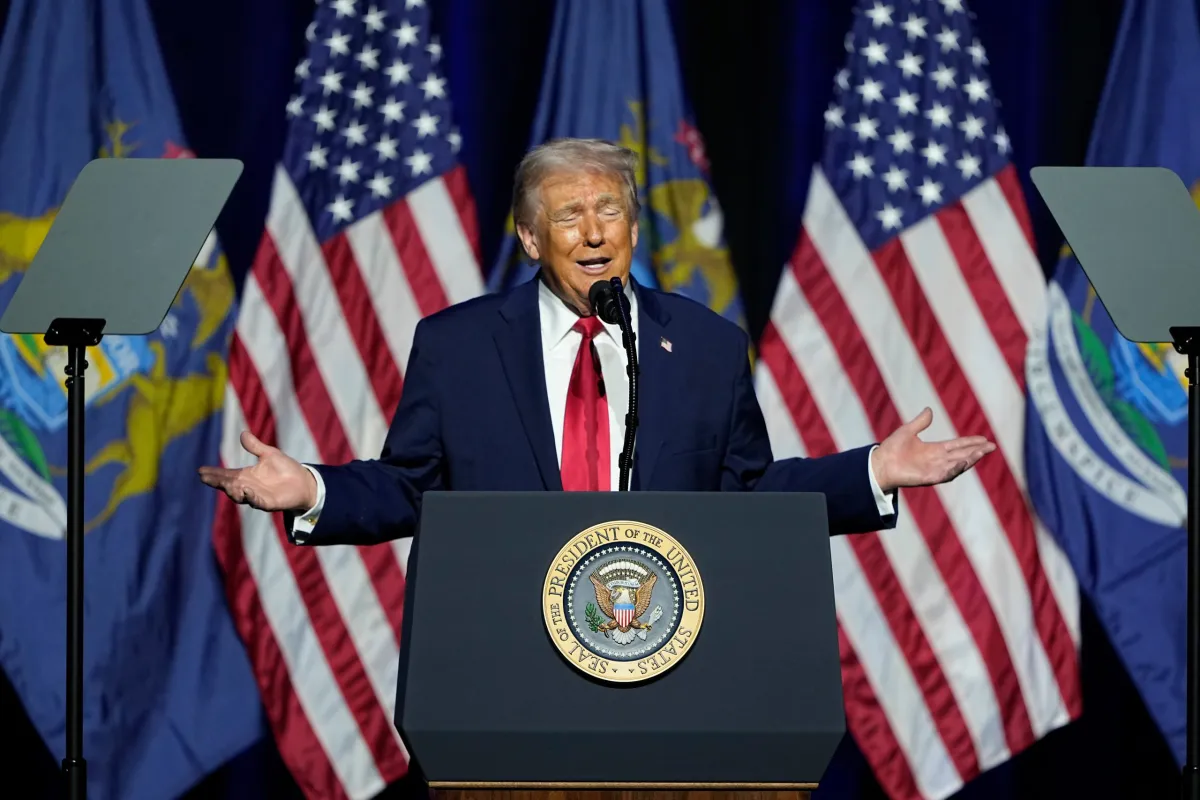
To answer these questions, it’s important to look at Trump as a political figure, not just as someone who acts on impulse or without clear reasoning. Trump’s style is unconventional and often unpalatable, but his actions follow a relatively consistent way of thinking. He is guided less by legal or institutional norms and more by leverage, outcomes and displays of dominance. He approaches politics as a series of deals in which rules are not neutral constraints but instruments: useful when they provide advantage, disposable when they don’t. By this framework, legitimacy doesn’t flow from process or collective agreement but is instead demonstrated through power and decisiveness. Authority becomes performative (Adler-Nissen, 2014). This helps explain Trump’s comfort with breaking norms, as multilateral institutions and legal frameworks are obstacles to him. His preference for bilateral pressure over collective decision-making and for speed over deliberation reflects a belief that outcomes justify the methods used, particularly when there are significant power asymmetries (Kertzer and Tingley, 2018).
Trump’s language about “running” Venezuela reflects a deeper assumption: that governance, legitimacy, and control aren’t fixed attributes of sovereignty but variables that can be rearranged when sufficient power exists to do so (Kurmanaev and Pager, 2026). The question, from this perspective, isn’t whether intervention violates norms, but whether it produces a favourable result.
It would be a mistake, however, to treat Venezuela as merely the product of Trump’s personality. What Trump makes visible isn’t an entirely new approach to international politics, but a set of assumptions that have long existed beneath the surface. The United States has historically defended sovereignty as a principle while selectively overriding it in practice, as demonstrated from Guatemala in 1954 to Iraq in 2003 (Kinzer, 2007; Mearsheimer and Walt, 2016). What distinguishes Trump isn’t the existence of this contradiction, but its openness. Where previous administrations often framed intervention as reluctant, exceptional, or institutionally constrained, Trump is more direct and less concerned with reconciling action with established norms (Brands, 2018). Trump is therefore better understood as someone who speeds up existing trends, not as a complete exception. He exposes a system in which powerful states can push the limits of sovereignty when enforcement is weak, and the costs are manageable. His actions force a reality often obscured by diplomatic language: sovereignty isn’t applied evenly, and its protection depends heavily on who is challenging it.
This brings sovereignty itself into focus. In theory, sovereignty means that states are legally equal, their borders cannot be violated, and they are free from outside interference. It is a key part of the United Nations and the world order after World War II. Yet international relations scholarship has long highlighted the gap between sovereignty as an ideal and sovereignty in practice. Stephen Krasner calls this ‘organised hypocrisy’, a principle that is constantly affirmed but routinely violated when it clashes with the interests of powerful states (Krasner, 1999).
The Venezuelan situation exposes this hypocrisy with unusual clarity. While critics discuss sovereignty as a legal and moral limit, the Trump administration treats it as something that can be overridden in cases of criminality, instability or strategic need. The implication is not that sovereignty no longer matters, but that it matters differently depending on who is using it and against whom. Realist scholars have long argued that in an international system without a central authority, rules do not limit all actors equally; their force depends on power, enforcement and political costs (Waltz, 1979; Mearsheimer, 2003). The concern today is not simply that sovereignty is unevenly applied, but that this unevenness is becoming more obvious and more normalised.
It is within this gap between principle and practice that the idea of transactional sovereignty becomes useful. Transactional sovereignty treats political authority not as absolute or inviolable, but as conditional, negotiable and outcome-driven. Sovereignty can be suspended, reshaped or reassigned if sufficient leverage exists and if the anticipated benefits are judged to outweigh the costs.
Trump’s foreign policy aligns closely with this logic. Authority is exercised through action rather than conferred through recognition. Legitimacy follows results rather than preceding them. Governance itself becomes provisional. Something that can be assumed or overlooked until a preferred outcome is achieved. This logic also connects Venezuela to other moments in Trump’s presidency that initially appeared idiosyncratic but reflect the same underlying assumptions, including his previously stated interest in acquiring Greenland. In each case, sovereignty and territory are treated less as fixed principles than as assets whose status can be renegotiated under conditions of extreme power asymmetry.
The most difficult question raised by Venezuela, however, concerns moral judgment. The case cannot be evaluated solely through abstract principles. Public reactions make clear that alongside condemnation and fear of escalation, there is also genuine relief among some Venezuelans and members of the diaspora. For those who have lived through prolonged repression and humanitarian crisis, Maduro’s removal represents the possibility of change where none previously seemed available (Ellis, 2026). That response matters and should not be dismissed.
Yet this relief sits uneasily alongside the broader implications of how the outcome was achieved. The dilemma is not whether the result is welcomed by some, but what kind of political meaning the action creates. If sovereignty can be overridden on the basis of anticipated benefits rather than collective authorisation, legitimacy becomes something judged after the fact rather than a constraint beforehand. From a power-centred perspective, outcomes may justify intervention. From a more institutional perspective, however, process is inseparable from meaning, and precedent matters deeply (Finnemore, 2013). The Venezuela case demonstrates a problem with legitimacy on two levels. At the domestic level, legitimacy is measured through lived experience and material improvement. On the international level, it is judged by rules, norms, and how power is shared (Clark, 2005). These levels do not always align, and it is precisely that misalignment that makes the situation so troubling.
Trump did not invent these tensions, but his actions expose them with unusual clarity. His confidence reflects more than personal temperament. It reveals an international system in which sovereignty is unevenly protected, norms are selectively enforced, and legitimacy is often granted retrospectively rather than required in advance. The uncomfortable reality is that short-term relief for some can coexist with long-term damage to the principles designed to protect weaker states. To acknowledge one does not require dismissing the other. In the end, the real question raised by the Venezuela case is not whether intervention can sometimes produce good results. The question is whether a world system that lets power decide who gets permission can still truly protect those without power. As long as that problem remains unresolved, sovereignty will continue to function less as a shield and more as a fragile, conditional and unevenly applied privilege.
Bibliography
Adler-Nissen, R. (2014) ‘Stigma Management in International Relations: Transgressive Identities, Norms, and Order in International Society’, International Organization, 68(1), pp. 143–176. Available at: https://doi.org/10.1017/S0020818313000337.
Brands, H. (2018) American Grand Strategy in the Age of Trump. Bloomsbury Publishing USA.
Clark, I. (2005) Legitimacy in International Society. OUP Oxford.
Ellis, C. (2026) Venezuelans reflect on Maduro’s removal, grappling with hope and fear, Al Jazeera. Available at: https://www.aljazeera.com/news/2026/1/4/venezuelans-reflect-onmaduros-
removal-grappling-with-hope-and-fear (Accessed: 12 January 2026).
Faguy, B. (2026) Donald Trump says US will ‘run’ Venezuela and ‘fix oil infrastructure’, BBC News. Available at: https://www.bbc.co.uk/news/articles/cd9enjeey3go (Accessed: 13 January 2026).
Finnemore, M. (2013) The Purpose of Intervention: Changing Beliefs about the Use of Force. Cornell University Press.
Global Times (2026). The US faces global condemnation, mixed reactions from ‘allies’ over raid on Venezuela. Available at: https://www.globaltimes.cn/page/202601/1352801.shtml (Accessed: 12 January 2026).
Hals, T. and Goudsward, A. (2026) ‘Was the US capture of Venezuela’s president legal?’, Reuters, 5 January. Available at: https://www.reuters.com/world/us/was-us-capturevenezuelas-
president-legal-2026-01-03/ (Accessed: 12 January 2026).
Kertzer, J.D. and Tingley, D. (2018) ‘Political Psychology in International Relations: Beyond the Paradigms’, Annual Review of Political Science, 21(1), pp. 319–339. Available at:
https://doi.org/10.1146/annurev-polisci-041916-020042.
Kinzer, S. (2007) Overthrow: America’s Century of Regime Change from Hawaii to Iraq. Macmillan.
Krasner, S.D. (1999) Sovereignty: Organized Hypocrisy. Princeton University Press. Available at: https://doi.org/10.1515/9781400823260.
Kurmanaev, A. and Pager, T. (2026) ‘Maduro Arrives in N.Y.; Trump Says U.S. Will “Run” Venezuela’, The New York Times, 3 January. Available at: https://www.nytimes.com/live/2026/01/03/world/trump-maduro-venezuela-us-strikes (Accessed: 12 January 2026).
Mearsheimer, J.J. (2003) The Tragedy of Great Power Politics. W. W. Norton & Company.
Mearsheimer, J.J. and Walt, S.M. (2016) ‘The Case for Offshore Balancing’, Foreign Affairs, pp. 70–83.
Taylor, H., Rogero, T. and Jones, S. (2026) ‘Global outcry after US launches strikes on Venezuela and captures president’, The Guardian, 3 January. Available at: https://www.theguardian.com/world/2026/jan/03/colombia-sends-armed-forces-venezuelaborder-concern-refugee-influx (Accessed: 5 January 2026).
Waltz, K.N. (1979) ‘Theory of International Politics’.