

By Desmond Ng1
On the 8th of July 2025, during a state visit to the United Kingdom, President Emmanuel Macron warned that the UK and France must “work together to counter the world’s many destabilising threats” and, most notably, to “protect Europe from ‘excessive dependencies’ on both the United States and China (Macaskill & Smout, 2025). Such calls are not unusual for Macron, nor for the European Union more broadly (Michaels & Sus, 2025). What is more striking, however, is that similar concerns are being voiced outside the West. Just two days later, Malaysian Prime Minister Anwar Ibrahim, speaking as ASEAN’s chair, called on Southeast Asian nations to “reduce strategic dependencies on external powers” (Ng, 2025).
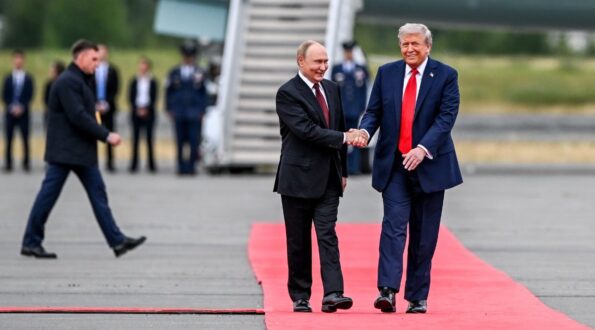
These parallel statements highlight a shared anxiety across regions: how to navigate an era of deepening great-power competition without becoming trapped in it. For ASEAN, the stakes are particularly high. China’s assertive behaviour in the South China Sea continues to test regional sovereignty (O’Rourke, 2022), while the United States has shown itself willing to weaponise tariffs and even flirt with annexation rhetoric as foreign policy tools (Bohannon & Pequeño IV, 2025). Against this backdrop, the question is no longer whether Southeast Asia should pursue strategic autonomy, but how it can do so effectively.
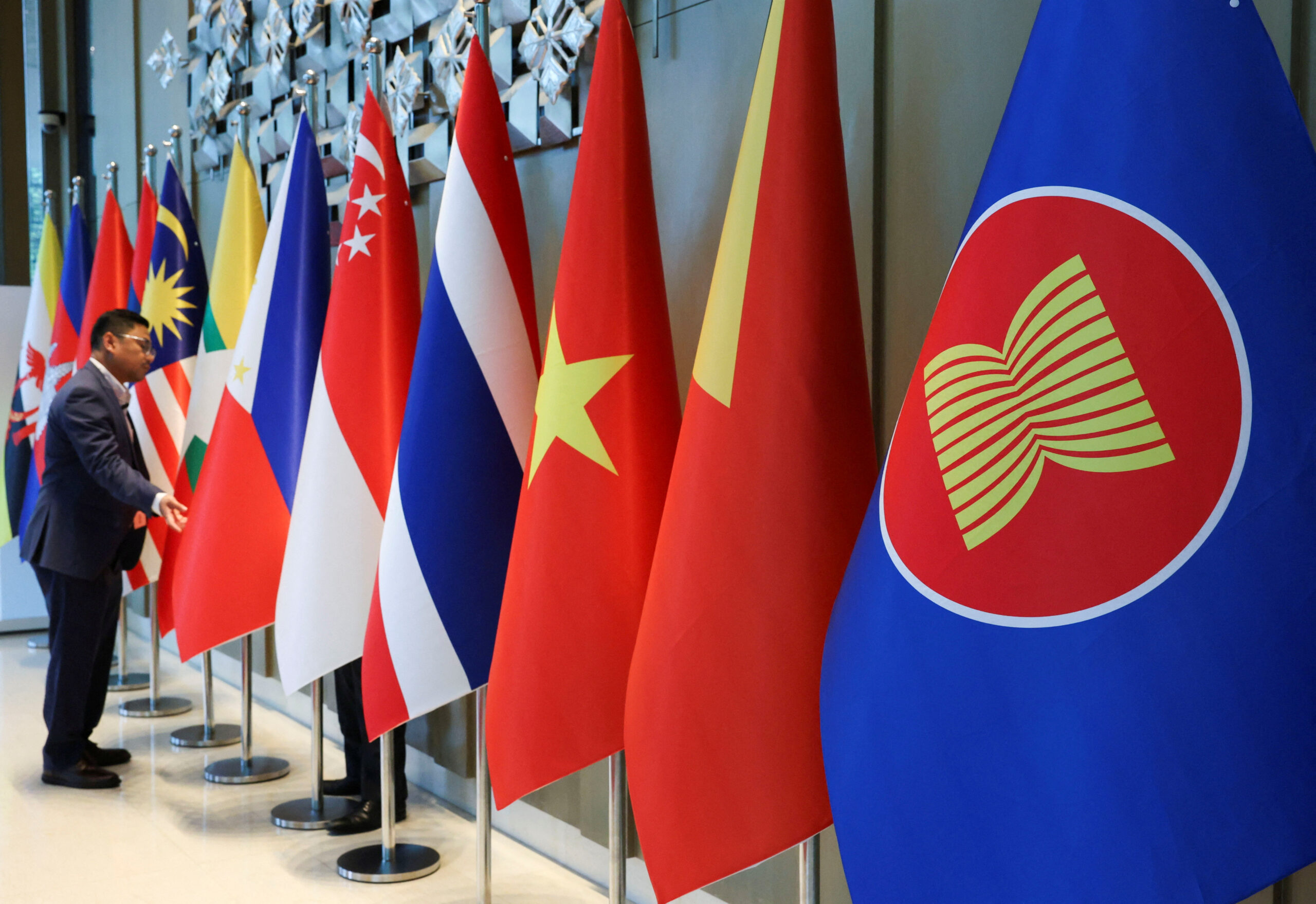
ASEAN today constitutes the world’s fifth-largest economy, buoyed by a technology and digital services sector (Source of Asia, 2024). Its geography, centred around the Strait of Malacca, ensures continued leverage over global trade flows (Evers & Gerke, 2006). Importantly, the recent ASEAN Digital Economy Framework Agreement (DEFA) illustrates the region’s collective commitment to cultivating digital development (Kao, 2025).
However, ASEAN’s external dependencies are significant. China remains its largest trading partner (Huld, 2024), while the US plays a vital role in both trade and investment (Weisel, 2025). In 2023, the US injected $74.4 billion in foreign direct investment, compared to China’s $17.3 billion (ASEAN, 2024). This reliance leaves ASEAN vulnerable to economic coercion and external shocks.
Domestic support for ASEAN’s strategic neutrality is rising. The 2025 State of Southeast Asia survey found that 68.5% of respondents viewed ASEAN’s growing regional clout positively, while also expressing concern about Chinese (61.9%) and American (43.2%) economic influence (ISEAS – Yusof Ishak Institute, 2025).
ASEAN leaders have also taken steps to advance regional autonomy, as seen in the ASEAN Outlook on the Indo-Pacific following the 34th ASEAN Summit in 2019 and efforts to cultivate ties beyond the US-China binary (Zhang, 2023). Even so, the instinct for bilateralism persists. Manila’s recent defence pact with Lithuania, conducted outside ASEAN structures, highlights the limits of collective foreign policy coordination (Gomez, 2025).
Strategically, the notion of Southeast Asian militaries as underdeveloped no longer holds. ASEAN states are modernising steadily, acquiring advanced technologies in artificial intelligence, autonomous weapons, and combat aviation (Wyatt & Galliott, 2020; Huxley, 2023; Siow, 2025; Strangio, 2025; Pounder, 2025). This trajectory opens the possibility of indigenous production of advanced systems, especially in response to China’s maritime assertiveness and the unpredictability of US policy (Wu, 2021).
Still, dependency persists. Myanmar and Thailand remain major clients of Chinese defence industries, while Singapore maintains close ties with American suppliers (Wu, 2021). Endemic problems such as corruption, weak training infrastructure, and wavering politics will further constrain progress.
To strengthen its pursuit of strategic autonomy, ASEAN might consider some alternative policy suggestions. Developing a more coherent and united foreign policy agenda should be a priority. This should place autonomy at its core, thereby reducing the dilution of influence caused by competing national priorities. At the same time, intra-ASEAN integration must be deepened through expanded regional trade and greater flexibility in labour mobility and resource sharing, drawing inspiration from aspects of the European Union. While ASEAN has already begun to diversify its external relations, these efforts should be broadened and deepened with partners such as Japan, South Korea, Australia, Türkiye, India, and the EU, all of whom possess resources and capacities that can help reinforce ASEAN’s economic, social, and strategic foundations. Equally important is the cultivation of greater defence cooperation: the ASEAN Solidarity Exercise of 2023, which brought together all ten member states, demonstrates that with sufficient political will and logistical support, unified military coordination is both feasible and practical (Mayberry, 2023).
ASEAN, therefore, possesses the economic weight, political momentum, and strategic potential to advance genuine autonomy in an increasingly unstable world. Achieving this, however, depends on whether the region can translate these policy directions into sustained action, overcoming persistent dependencies and domestic weaknesses. In an era marked by the decline of American hegemony and the uncertainties of multipolar competition, Southeast Asia must rely on its collective capacity rather than external powers. Strategic autonomy is thus not a distant aspiration but a practical necessity for ASEAN’s long-term security and prosperity.
References:
ASEAN (2024) ASEAN Investment Report 2024: ASEAN Economic Community 2025 and Foreign Direct Investment. Available at: https://asean.org/book/asean-investment-report-2024-asean-economic-community-2025-and-foreign-direct-investment/ (Accessed 12 July 2025).
Bohannon, M. & Pequeño IV, A. (2025) ‘Here’s the Full List of Trump’s Reciprocal Tariffs Announced Wednesday’, Forbes, 2 April. Available at: https://www.forbes.com/sites/mollybohannon/2025/04/02/heres-the-full-list-of-trumps-reciprocal-tariffs-announced-wednesday/ (Accessed 14 April 2025).
Evers, H.D. & Gerke, Solvay (2006). The Strategic Importance of the Straits of Malacca for World Trade and Regional Development. ZEF Working Paper Series No.17. Available at: https://hdl.handle.net/10419/88407 (Accessed 28 October 2024).
Gomez, J. (2025) ‘Lithuania and Philippines Sign a Pact to Build an Alliance against Aggression’, AP News, 30 June. Available at: https://apnews.com/article/philippines-lithuania-defense-cooperation-c7a2d3827ada567e2e6bab9efad93637 (Accessed 12 July 2025).
Huld, A. (2024) China-ASEAN Trade and Investment Relations. Available at: https://www.china-briefing.com/news/china-asean-trade-and-investment-relations/#:~:text=As%20a%20bloc%2C%20ASEAN%20is,percent%20from%20the%20previous%20year. (Accessed 28 October 2024).
Huxley, T. (2023) ‘Malaysia’s defence policy under the Anwar Government’, IISS, September 2023. Available at: https://www.iiss.org/ar-BH/online-analysis/online-analysis/2023/09/malaysias-defence-policy-under-the-anwar-government/ (Accessed 12 July 2025).
ISEAS – Yusof Ishak Institute (2025). The State of Southeast Asia: 2025 Survey Report. Available at: https://www.iseas.edu.sg/centres/asean-studies-centre/state-of-southeast-asia-survey/the-state-of-southeast-asia-2025-survey-report/ (Accessed 10 May 2025).
Kao, K.H. (2025) ‘Why ASEAN’s New Digital Economy Framework Agreement is a Game-Changer’, World Economic Forum, 26 May. Available: https://www.weforum.org/stories/2025/05/asean-digital-economy-framework-agreement-a-gamechanger/#:~:text=DEFA%20incorporates%20high%20standards%20in,and%20relevant%20to%20economic%20change. (Accessed 12 July 2025).
Macaskill, A. & Smout, A. (2025) ‘UK and France must end dependency on US and China, Macron warns’, Reuters, 8 July. Available at: https://www.reuters.com/world/uk/king-charles-hosts-macron-first-european-state-visit-since-brexit-2025-07-08/ (Accessed 12 July 2025).
Mayberry, K. (2023). ‘Baby Steps’ for ASEAN as it wraps up first-ever joint military drills, Al Jazeera, 25 Sep. Available at: https://www.aljazeera.com/news/2023/9/25/baby-steps-for-asean-as-it-wraps-up-first-ever-joint-military-drills#:~:text=The%20exercise%20focused%20on%20humanitarian,tentative%20steps%20towards%20military%20cooperation.&text=The%2010%20countries%20of%20the,first%2Dever%20joint%20military%20drills. (Accessed 12 July 2025).
Ng, E. (2025) ‘Malaysian PM Warns Southeast Asia that Trade War is Not a ‘Passing Storm’”, AP News, 10 July. Available at: https://apnews.com/article/malaysia-asean-tariffs-trade-anwar-81af74f2f3f13881950d44ed4dd9b4fd (Accessed 12 July 2025).
O’Rourke, R. (2022). U.S.-China Strategic Competition in South and East China Seas: Background and Issues for Congress. Washington, D.C.: Congressional Research Service. Available at: https://crsreports.congress.gov/product/pdf/R/R42784/139 [Accessed 20 October 2024].
Siow, M. (2025) ‘Malaysia’s South China Sea Defences Set for Fighter Jet Boost in ‘Quiet’ Military Build-up’, South China Morning Post, 11 July. Available at: https://www.scmp.com/week-asia/politics/article/3317779/malaysias-south-china-sea-defences-set-fighter-jet-boost-quiet-military-build (Accessed 12 July 2025).
Source of Asia (2024). Doing Business in ASEAN 2024-2025. Available at: https://info.sourceofasia.com/booklet-download-soa-2024-2025/ (Accessed 12 July 2025).
Strangio, S. (2025) ‘Vietnam has Reached Deal with US on F-16 Fighter Purchase, Report Claims’, The Diplomat, 22 April. Available at: https://thediplomat.com/2025/04/vietnam-has-reached-deal-with-us-on-f-16-fighter-purchase-report-claims/ (Accessed 12 July 2025).
Weisel, B. (2025) ‘Building Bridges, Countering Rivals: Strengthening U.S.-ASEAN Ties to Combat Chinese Influence,’ Carnegie Endowment for International Peace, 10 June. Available at: https://carnegieendowment.org/posts/2025/06/building-bridges-countering-rivals-strengthening-us-asean-ties-to-combat-chinese-influence?lang=en (Accessed 12 July 2025).
Wu, S. (2021) ‘Military modernisation in Southeast Asia in the Indo-Pacific strategic context’, Defense & security analysis, 37(2), pp. 212–231. Available at: https://doi.org/10.1080/14751798.2021.1919355.
Wyatt, A. & Galliott, J. (2020) ‘Closing the Capability Gap: ASEAN Military Modernization during the Dawn of Autonomous Weapon Systems’, Asian security (Philadelphia, Pa.), 16(1), pp. 53–72. Available at: https://doi.org/10.1080/14799855.2018.1516639.
Zhang, J. (2023) ‘Rebuilding strategic autonomy: ASEAN’s response to US–China strategic competition’, China International Strategy Review, 5(1), pp. 73–89. Available at: https://doi.org/10.1007/s42533-023-00128-3.
1 Postgraduate student at Lancaster